
"coffee growing tips"
2000 article(s) found

The basic taste of coffee The growing environment of coffee trees
Taste is the sensation of taste. Sensory organs are located in a mucus-coated membrane on the tongue. Its irritant consists of soluble compounds. The four basic coffee flavors that people can distinguish are sweet, salty, sour and bitter. Sweet is characterized by sugar, alcohol, and certain acidic solutions. Sweetness is mainly felt by fungiform papillae at the tip of the tongue

Do you know how much knowledge you need to accept when it comes to coffee?
How long have you been exposed to coffee? There are some small details and operations, why can or not, do you know what the reason is? Tell you the common sense of coffee that you can't help but know! Tip 1-one-way exhaust valve, not smelling incense holes. Hey, have we all had the experience that when you buy coffee beans in stores or supermarkets, you can't help but squeeze the packaging with your hands and then face the holes in the packaging of coffee beans?

Is Yega Chefee Coffee bitter? Yega Chefe Coffee describes the garden on the tip of the tongue
Professional coffee knowledge exchange more coffee bean information please follow the coffee workshop (Wechat official account cafe_style) front street-Yejia Xuefei introduction if you are reading the letter now, hope the night is gentle, you go to bed, with a favorite lamp. Or on a long-distance train, the passengers in the carriage had better be scattered. You can sit by the window and occasionally have a glimpse of the scenery.
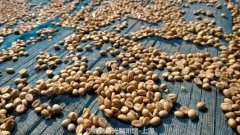
A brief introduction to the description of the flavor, taste and aroma characteristics of boutique coffee beans in Santa Rita Manor.
The main varieties of Colombian coffee are small grains of coffee. Plants are small trees or large shrubs, 5-8 m tall, usually much branched at base; old branches gray-white, nodes dilated, young branches glabrous, compressed. Leaves thinly leathery, ovate-lanceolate or lanceolate, 6-14 cm long and 3.5-5 cm wide, tip long acuminate, acuminate part 10-15 mm long, base cuneate or slightly obtuse, rarely rounded, entire or

A brief introduction to the History and Culture of the Origin and Development of Fine Coffee beans in Santa Rita Manor
The main varieties of Colombian coffee are small grains of coffee. Plants are small trees or large shrubs, 5-8 m tall, usually much branched at base; old branches gray-white, nodes dilated, young branches glabrous, compressed. Leaves thinly leathery, ovate-lanceolate or lanceolate, 6-14 cm long and 3.5-5 cm wide, tip long acuminate, acuminate part 10-15 mm long, base cuneate or slightly obtuse, rarely rounded, entire or

Introduction to the regional characteristics of Columbia Linglong Huashen coffee taste grinding scale
Columbia Linglong Flower God Coffee Taste Grinding scale the regional characteristics of Colombian coffee varieties are mainly small-grain coffee. Plants are small trees or large shrubs, 5-8 m tall, usually much branched at base; old branches gray-white, nodes dilated, young branches glabrous, compressed. Leaves thinly leathery, ovate-lanceolate or lanceolate, 6-14 cm long, 3.5-5 cm wide, tip long acuminate

Introduction to the planting Environment of Colombian Coffee grown in the Highland introduction to the production area of Fine Coffee Bean Coffee Manor
The main varieties of Colombian coffee are small grains of coffee. Plants are small trees or large shrubs, 5-8 m tall, usually much branched at base; old branches gray-white, nodes dilated, young branches glabrous, compressed. Leaves thinly leathery, ovate-lanceolate or lanceolate, 6-14 cm long and 3.5-5 cm wide, tip long acuminate, acuminate part 10-15 mm long, base cuneate or slightly obtuse, rarely rounded, entire or
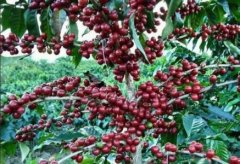
A brief introduction to the cultivation of high-quality boutique coffee beans in Santa Rita Manor, geographical location, climate and altitude
Growing coffee also requires daylight and proper shade, which is most suitable for planting on fertile soil or volcanic ash soil. Therefore, the origin of coffee is widely distributed in South America, Central America, the West Indies, Asia, Africa, Arabia, the South Pacific and Oceania. Such as Ethiopia and Tanzania in Africa, Brazil, Colombia, Jamaica, Guatemala and Mexico in Central and South America.

Flavor description of Columbia Linglong Coffee Bean introduction of varieties produced by taste treatment method
Columbia Linglong Coffee Bean Flavor description Taste treatment the varieties of Colombian coffee are mainly small-grain coffee. Plants are small trees or large shrubs, 5-8 m tall, usually much branched at base; old branches gray-white, nodes dilated, young branches glabrous, compressed. Leaves thinly leathery, ovate-lanceolate or lanceolate, 6-14 cm long, 3.5-5 cm wide, tip long acuminate

Elegant aroma of Sanrita Manor Boutique Coffee Bean Flavor Taste Aroma Characteristics Description Introduction
by a particular combination of factors, latitude, altitude, soil, plant origin of species and variety of coffee making in coffee growing areas of Colombia, climate in coffee growing areas and rain patterns resulting from dual paths of tropical convergence, changing topography throughout the day, light intensity, favorable temperature ranges throughout the year, moderate and rainfall distribution, and including selective harvesting
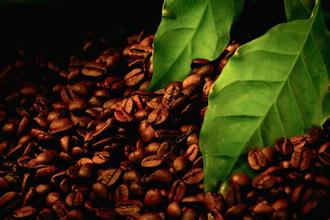
Flavor description of Colombian Ramon Coffee beans introduction to the taste of grinding scale varieties
Description of the flavor of Colombian Ramon coffee beans the taste of Colombian coffee is mainly small-grain coffee. Plants are small trees or large shrubs, 5-8 m tall, usually much branched at base; old branches gray-white, nodes dilated, young branches glabrous, compressed. Leaves thinly leathery, ovate-lanceolate or lanceolate, 6-14 cm long, 3.5-5 cm wide, tip long acuminate

Colombian Coffee Flavor Manor introduction to Lazmus Manor
The main varieties of Colombian coffee are small grains of coffee. Plants are small trees or large shrubs, 5-8 m tall, usually much branched at base; old branches gray-white, nodes dilated, young branches glabrous, compressed. Leaves thinly leathery, ovate-lanceolate or lanceolate, 6-14 cm long and 3.5-5 cm wide, tip long acuminate, acuminate part 10-15 mm long, base cuneate or slightly obtuse, rarely rounded, entire or

Columbia Coffee planting Information Santa Rita Manor Flavor description planting Variety producing area Information
For the exchange of professional baristas, please pay attention to the coffee workshop (Wechat official account cafe_style) by a special combination of various factors, latitude, altitude, soil, plant origin of species and varieties of coffee production in Colombia's coffee growing area, rain patterns produced by climate and tropical convergence in the coffee growing area, changing topography and luminosity in one day, throughout the year.

High quality Sanrita estate coffee beans grinding degree roasting degree processing method
Growing coffee also requires sunlight and proper shade, and is best done on fertile or volcanic ash soil. Therefore, coffee is widely distributed in South America, Central America, West Indies, Asia, Africa, Arabia, South Pacific and Oceania. Ethiopia and Tanzania in Africa, Brazil, Colombia, Jamaica, Guatemala and Mexico in Central and South America

Colombian coffee growing environment Colombian coffee culture
The history of coffee cultivation in Colombia can be traced back to the Spanish colonial era in the 16th century, and there are many theories about the history of coffee in Colombia: one: it is said to come from the island of Haiti in the Caribbean and from El Salvador in Central America. Second: in 1808, a priest introduced coffee beans to Colombia for the first time from the French Antilles via Venezuela. One of them

Columbia Hope Manor Coffee Grinding characteristics Variety Flavor description Taste introduction
The main varieties of Colombian coffee are small grains of coffee. Plants are small trees or large shrubs, 5-8 m tall, usually much branched at base; old branches gray-white, nodes dilated, young branches glabrous, compressed. Leaves thinly leathery, ovate-lanceolate or lanceolate, 6-14 cm long and 3.5-5 cm wide, tip long acuminate, acuminate part 10-15 mm long, base cuneate or slightly obtuse, rarely rounded, entire or

Colombia Emerald Roast Deep Coffee Flavor Description Treatment Taste Grind Scale Introduction
Colombia Emerald Roast Deep Coffee Flavor Description Processing Method Taste Grinding Scale Introduction Colombia is rich in products, especially coffee, flowers, gold and emeralds known as the four treasures. Coffee was first introduced to Colombia in 1808 by a priest from the French Antilles via Venezuela. Today the country is the second largest coffee producer after Brazil and the largest Arabica in the world.

Columbia Coffee Manor with Sweet Flavor characteristics of Fine Coffee beans
The main varieties of Colombian coffee are small grains of coffee. Plants are small trees or large shrubs, 5-8 m tall, usually much branched at base; old branches gray-white, nodes dilated, young branches glabrous, compressed. Leaves thinly leathery, ovate-lanceolate or lanceolate, 6-14 cm long and 3.5-5 cm wide, tip long acuminate, acuminate part 10-15 mm long, base cuneate or slightly obtuse, rarely rounded, entire or

The taste of Colombian coffee introduces the characteristics of Colombian boutique.
The main varieties of Colombian coffee are small grains of coffee. Plants are small trees or large shrubs, 5-8 m tall, usually much branched at base; old branches gray-white, nodes dilated, young branches glabrous, compressed. Leaves thinly leathery, ovate-lanceolate or lanceolate, 6-14 cm long and 3.5-5 cm wide, tip long acuminate, acuminate part 10-15 mm long, base cuneate or slightly obtuse, rarely rounded, entire or

A brief introduction to the market price of boutique coffee beans in Santa Rita Manor
A special combination of factors, latitude, altitude, soil, plant origin of species and varieties of coffee making in Colombia, rain patterns produced by the climate and tropical convergence of coffee growing areas, changing topography, luminosity, favorable temperature range throughout the year, moderate and Rain Water distribution, including selective logging.